-

-

- Download App
Ever wonder how Zomato, GoJek, or Uber Eats became overnight household brands? Today, with an on-demand delivery app, customers get everything they need in the comfort of their taps. Building a successful on-demand delivery app is more than just a fad-it’s changing the game in business. But what does it take to build an app like these giants? Let’s read further to look at the essentials of app building for a seamless business and user experience.
An on-demand delivery application is an electronic interface which connects users with services or products needed, be it food, groceries, and even some special everyday essentials. It’s one of the fastest and most reliable services that suits the needs of the convenience users. This model has, in turn, motivated almost every business to adopt services in developing a food delivery application to creating a grocery delivery application development. Some even go so deep as meat delivery application development or apps for delivering milk.
It specializes in food delivery with a promise of guaranteed completion that depends on routing optimizations and ordering priorities. All other features that it offers are customer-oriented. It still is, though, making use of an application that integrates several services, including the ride-hailing service along with its food delivery along with some other services on the application. Each of these applications have made their own niche that they have specialized with approaches customized according to needs from customers as well as market demands to provide parity with the rest of the delivery on demand applications.
Must-haves in an on-demand application are beyond primary use cases; they encompass an easy experience with all advanced functions anticipating user requirements, so here are some must-feature lists to consider as described below:
Based on these integrations into your app will deliver to the users in a seamless way, a convenient experience with interaction, thereby increasing customer satisfaction and retention. This is something very important while building a robust and scalable app because selecting the right tech stack in this regard will ensure whether the app will perform rightly or not. So here’s an overview of your on-demand delivery app from different parts with regard to the tech options that include:
The right tech stack ensures the app remains responsive, scalable, and user-friendly as your business grows.
Developing a good on-demand delivery app requires a structured approach. Here are the critical steps involved in it.
Now that you know your market well, it is time to build a great app. Know your competition, that is Instacart and DoorDash. Understand what is being done right and the gaps where you can correct it. Find the pain points, preferences, and gaps in service for users so that you can outline your USPs.
What will stand out about your app? The features that fill the space where current apps are leaving holes? Speedy delivery, cheaper to deliver or an eco-friendly choice with packaging options.
At the very heart of any app lies UX design. It has to be intuitive to navigate around your app. Features you can reach in a couple of taps: seamless journey for the user from choosing a product to checking out.
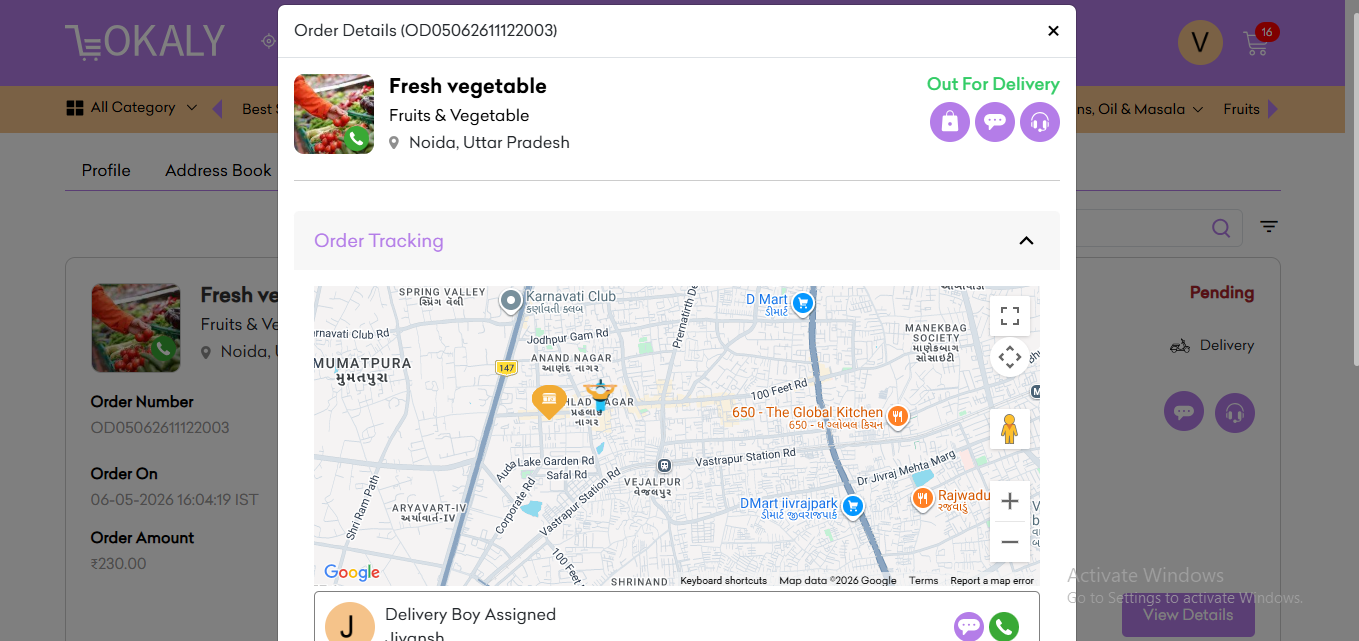
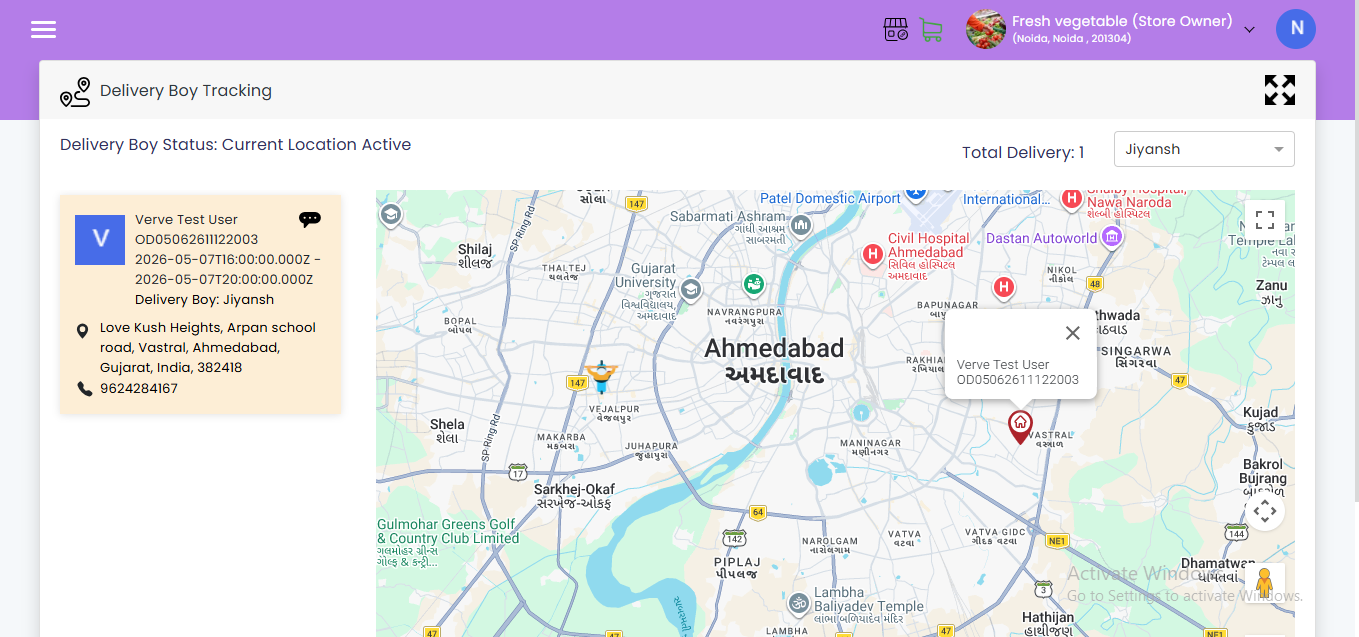
Releasing an MVP launch helps you understand how much the user is interested in it, what needs to be fixed, and you even get the possibility of working on the app some more before its official release. The primary functionalities present within the MVP would be browse through the products, check-out process, and order tracking.
Once the application has launched, it is actually imperative to collect feedback from users at regular time gaps and improve the application for performance, new feature additions, and bugs removals. Use data analytics in order to get an in-depth understanding of user behavior, which further enhances the application.
Lokaly comes with expert guidance all over the phases. Hence every step is taken according to best practices and industrial standards.
The cost of development for an on-demand delivery app is steep and would depend on the complexity of application, location of the team for development, and a number of features required at that point.
Consulting with an expert like Lokaly will get you a very specific quote based on the requirements that you have with the best possible outcome in accordance with your budget.
The most essential aspect of any on-demand app is a sustainable revenue model. Here are some common monetization strategies:
Most monetization strategies always ensure that the revenue flows in while keeping the users around; hence, maximizes profits and profitability.
User experience is customer retention. Here is how you can enhance user experience with respect to your on-demand delivery application:
These UX strategies will help you build an application that users love, thus promoting repeat orders and long-term loyalty.
Properly planned, with a customer-centric approach and well-defined revenue streams, you can assure that this on-demand delivery app goes successful. Robust development with seamless UX and personalized features in the app is sure to deliver what high market demand necessitates while standing unique within the marketplace. With Lokaly, you will experience professional services for on-demand application development. It will not only help you to suit your requirement but also enable you to bring it to existence precisely.
After reviewing our on-demand delivery app business guide, you should now have a clear understanding of how to develop your app and be ready for launch. However, success in the on-demand delivery space isn’t just about having a good idea. To stay competitive in this fast-paced market, continual innovation and staying updated with the latest technological trends are key to long-term success.
Imagine everything you need shows up at your doorstep almost instantaneously! With the increasing demand for faster service, quick commerce is emerging as a revolutionary trend in retail. Consumers now expect to receive grocery products and personal care items within minutes. This demand extends to many other products, too, instead of hours or days.
Quick commerce delivery is revolutionizing the face of retail commerce because of its ultra-fast delivery, contrasting with the days it takes in traditional models. A pioneer in this area, Lokaly allows businesses and consumers alike to explore this rapidly growing sector for the convenience and efficiency it has to offer.
In this blog, we will discuss how quick commerce is changing the face of retail, the benefits of quick shop markets, technological advancements driving this trend, and what these innovations mean for businesses and customers. From grocery delivery app development to online ordering of milk, quick commerce is a movement that’s here to stay. Let’s dive in!
Quick commerce, or q-commerce, is the future of retail commerce. Here, the objective is to get the products, especially essentials, delivered within 10-60 minutes.
Almost instantaneously, the right infrastructure and platforms bring the store to the customer’s doorstep. Quick commerce focuses on immediacy, eliminating the multi-day waiting time typical of traditional e-commerce.
This evolution caters to the digitally connected, on-the-go customer base and is available to give customers incredible convenience with a minimal wait. Such products as groceries, toiletries, medicines, and even fresh produce are readily made available. Let’s look closer at how quick commerce stands out.
Quick commerce delivery has changed everything from point A to B regarding how products get across. With convenience at the heart of all shopping today, businesses and retailers are searching for ways to optimize the supply chain and logistics to better use the model. Real time is what quick commerce delivers, unlike the more traditional world of e-commerce with hours or days waiting for delivery. Many consumer and business benefits result from this trend. Consumers appreciate having access to unmatched ease, and the businesses benefit by having an advantage they could not find elsewhere in the marketplace.
Lokaly is also aware of this and refined its delivery solutions so the business can always fulfil customer needs and wants effectively and efficiently as well.
The speedy shop market has emerged to become a very crucial component of the retail operation, particularly in the urban settings because it is convenient over the magnitude of supply available. The customers here tend to make purchases at the greatest speeds and convenience rather than with great choice. Quick shop models offer essential needs at record-breaking speed making them extremely popular with the time-sensitive consumer.
A core component of quick commerce is grocery delivery app development, which allows customers to buy and have groceries delivered within a few minutes. With such huge demand, the proper design of a grocery app can be an important point of differentiation for any company in a competitive market, especially in urban areas.
An efficient grocery delivery application makes life much easier for customers and helps the businesses take a larger portion of the market by capturing the growing demand of quick grocery delivery.
With this, more companies realize the potential of quick commerce, and as a result, white-label solutions have been prominent as a strategic choice. A white-label solution allows brands to launch a quick commerce platform under their label but not develop it from scratch. This strategy saves time, costs, and development efforts while allowing companies flexibility in tailoring the platform to their needs.
This will also mean that the solution has room for brands to start quick commerce platforms of their own. That is something that this industry will find an even better footing in, in much easier ways with Lokaly.
E-commerce delivery has developed over time to accommodate the needs of quick commerce. Speed in delivery is now as vital as product quality; companies have started adopting new technologies, including self-driving cars and drones, to make deliveries even faster. The quick commerce model changed the expectation of customers for ease and reliability, which led to the integration of e-commerce delivery in this ecosystem.
This is just an example of niche service well adopted by quick commerce in its business. From such an order, one can get milk and other perishables on the online platform to ensure the freshness that is daily required without necessarily stepping inside a shop. Quick commerce enhances daily life by swiftly meeting the demand for essentials like milk, bread, and other perishables.
This rapid growth of demand for fast commerce causes Lokaly to respond and shift with the consumer trends it creates through offering new sets of requirements for its users. With innovative technology and optimized logistics, Lokaly ranks among the top choices for creating and operating quick commerce channels.
Quick commerce is more than a trend. It is simply an emerging face of retail and commerce. With every consumer expectation, businesses can find effective ways to highlight quickness, efficiency, and convenience.
Lokaly enables businesses to thrive in quick commerce by delivering essential goods to consumers with speed and reliability